My son has been asking about Katahdin since he was eight. Four years of “when can we do it?” — and this June we finally went. He was twelve, fit from two seasons of soccer, and absolutely certain he was ready. I was less certain. Katahdin is a full-commitment day even for experienced adults, and the upper Hunt Trail is real scrambling on wet granite with no clean bailout once you’re past treeline.
We did it anyway. Here is what actually happened.
The Logistics
Reservations for Katahdin day hikes open in early February and sell out within hours. We got ours in the first five minutes of the booking window — I set an alarm and had the page loaded. Miss that window and you are waiting for cancellations. Book early or do not plan on going.
We camped the night before at Katahdin Stream Campground, which I’d recommend to anyone doing this with kids. Arriving the morning of from two hours away adds fatigue you don’t need. The campground is quiet, the falls are a five-minute walk, and the ranger station has good maps and current trail conditions posted.
Start time: 6:00am. No exceptions with kids. Katahdin needs a full day, afternoon thunderstorms are common in June, and a 12-year-old moves slower on technical terrain than an adult. We were on trail by 6:05.
The Lower Trail
The first two miles of the Hunt Trail through the trees are straightforward — a steady climb on a well-marked path. My son barely broke a sweat and I could tell he was mentally underestimating what was ahead. The waterfall at 1.1 miles is worth a ten-minute stop: good photos, cool water to fill bottles, and a natural energy reset before the push.
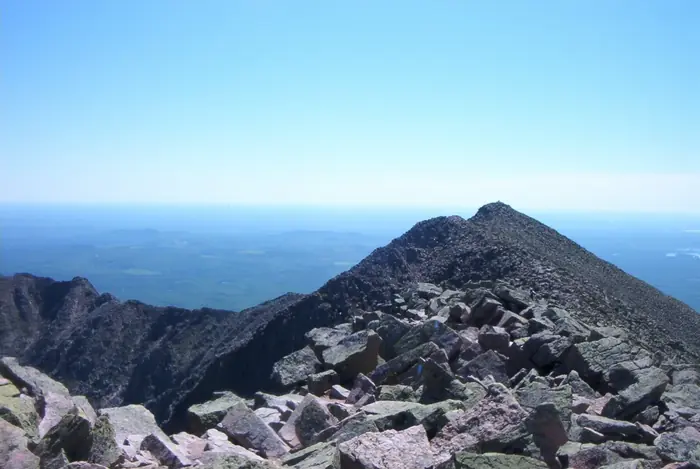
By 2.8 miles we cleared treeline. That is the moment everything changes. The trail opens into the tableland, wind picks up, and Baxter Peak appears for the first time above you. My son went quiet. The scale of it registered.
The Upper Scramble
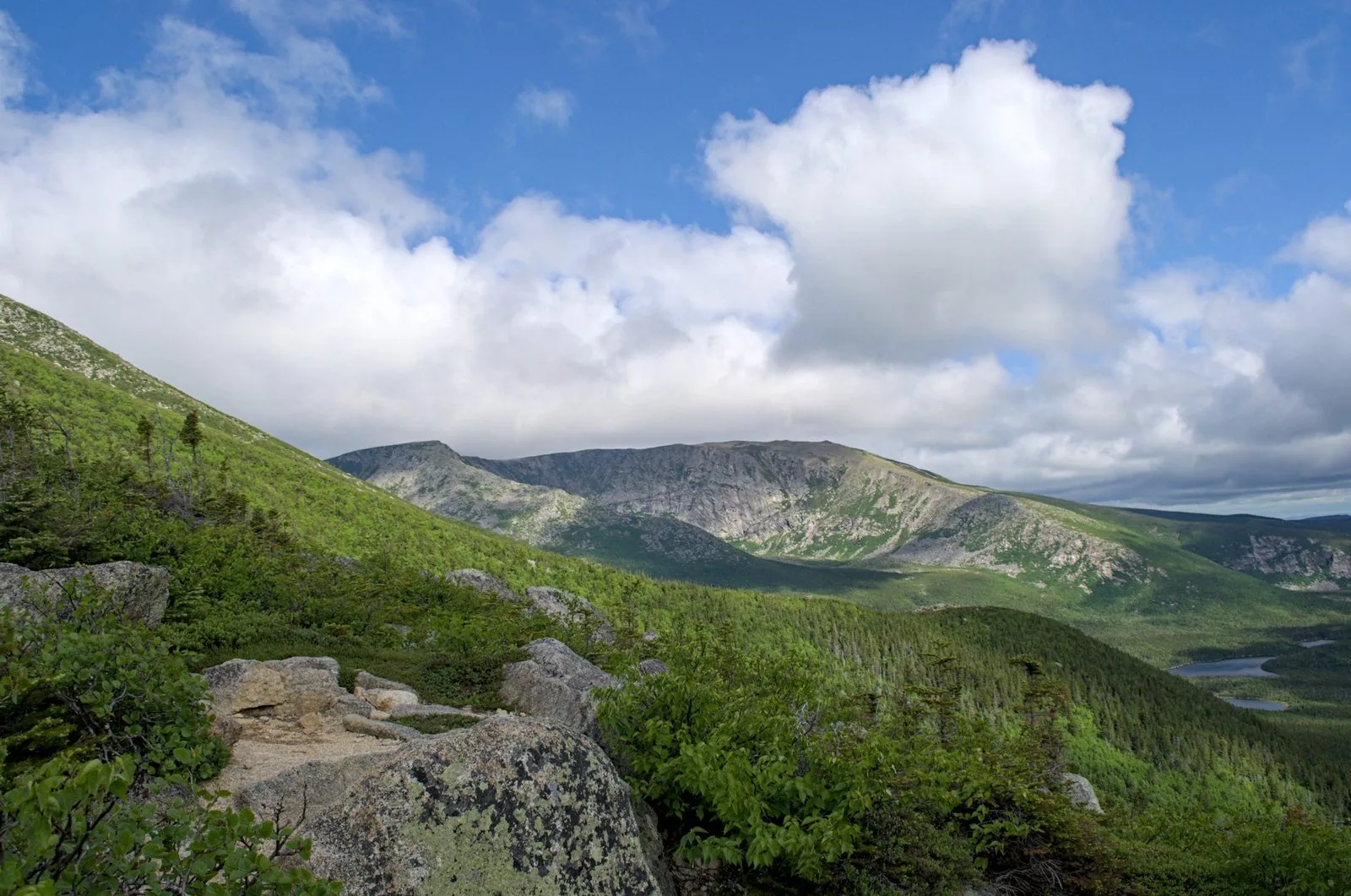
This is where to be honest with yourself about your kid. The upper Hunt Trail is third-class scrambling on granite slabs with some steep exposure. Wet rock makes it harder. It is not technical climbing — no ropes needed — but it demands focus and good footwear for a couple of solid hours.
My son is comfortable on rocks and has hiked enough in Maine to understand “watch your footing.” He did great. He also slipped once on a damp slab, caught himself, and that was the moment his posture changed — more deliberate, less cocky. That’s the mountain teaching, and it’s a good thing.
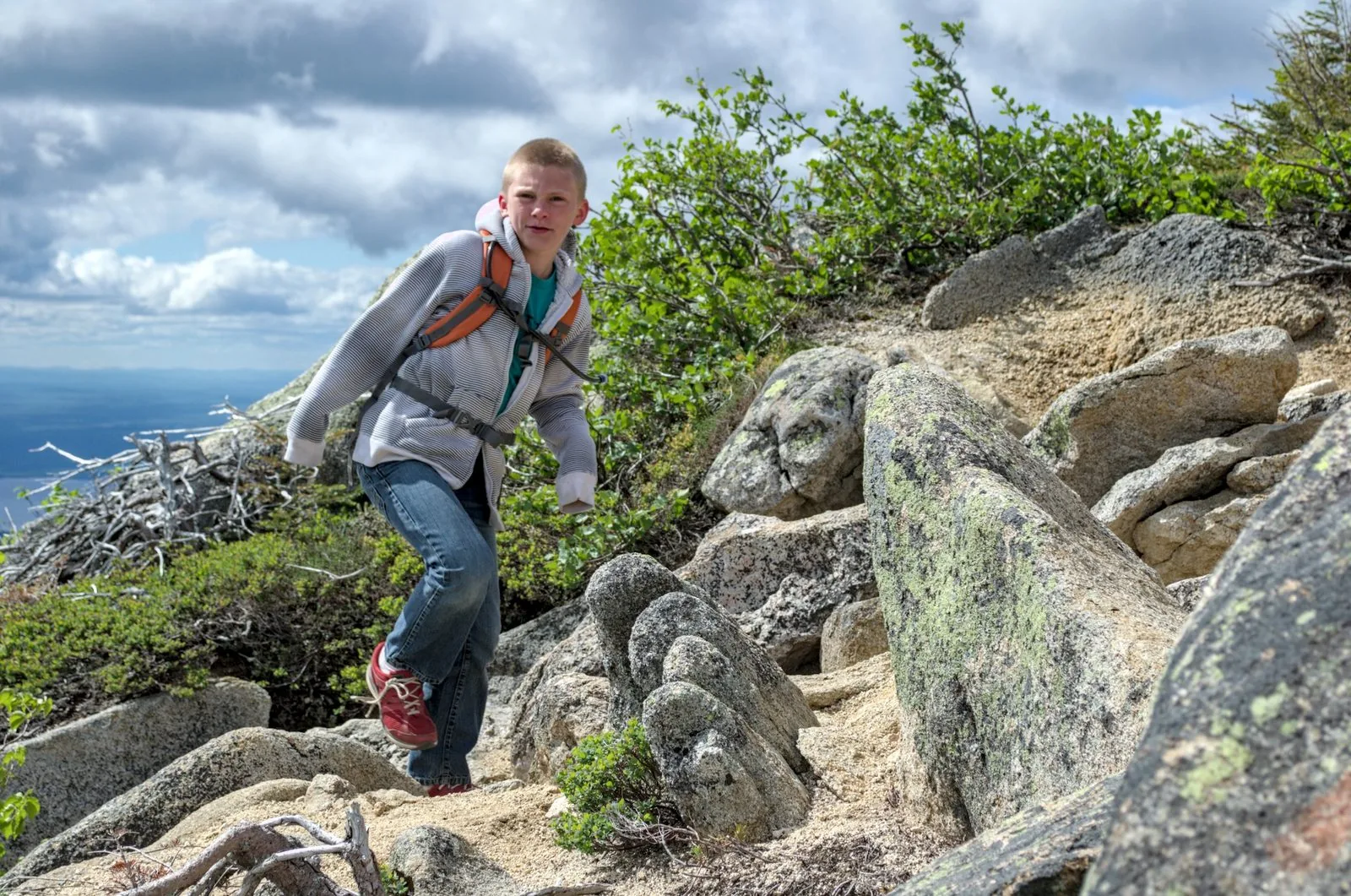
What helped:
- Trail runners with actual grip (his running shoes would have been a problem)
- Hiking poles for me (freed both his hands for scrambling)
- Stopping every 30 minutes regardless of how he felt — summit fever is real even at 12
- Snacks every stop without asking; his output correlates directly with his caloric input
The Summit
Baxter Peak at 10:20am. Four hours and twenty minutes from the trailhead. He made it look easier than I expected, and I told him so.
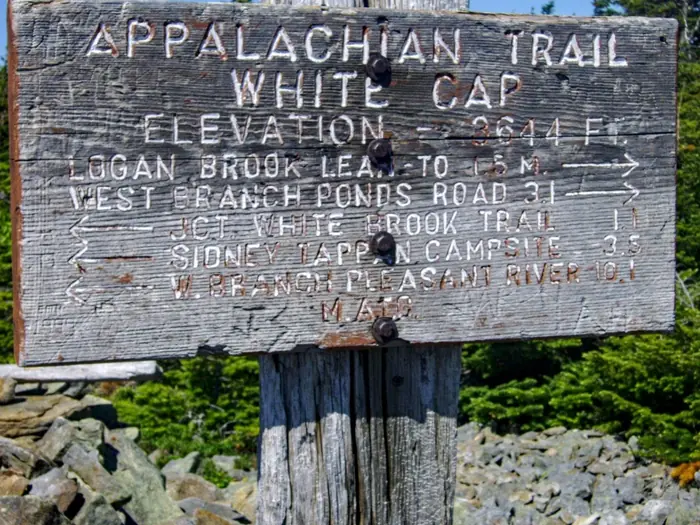
The AT terminus sign was surrounded by people and he didn’t care — he went straight for the biggest boulder on the ridge and climbed it. Laid out on his back, arms spread wide, laughing. I got the shot.
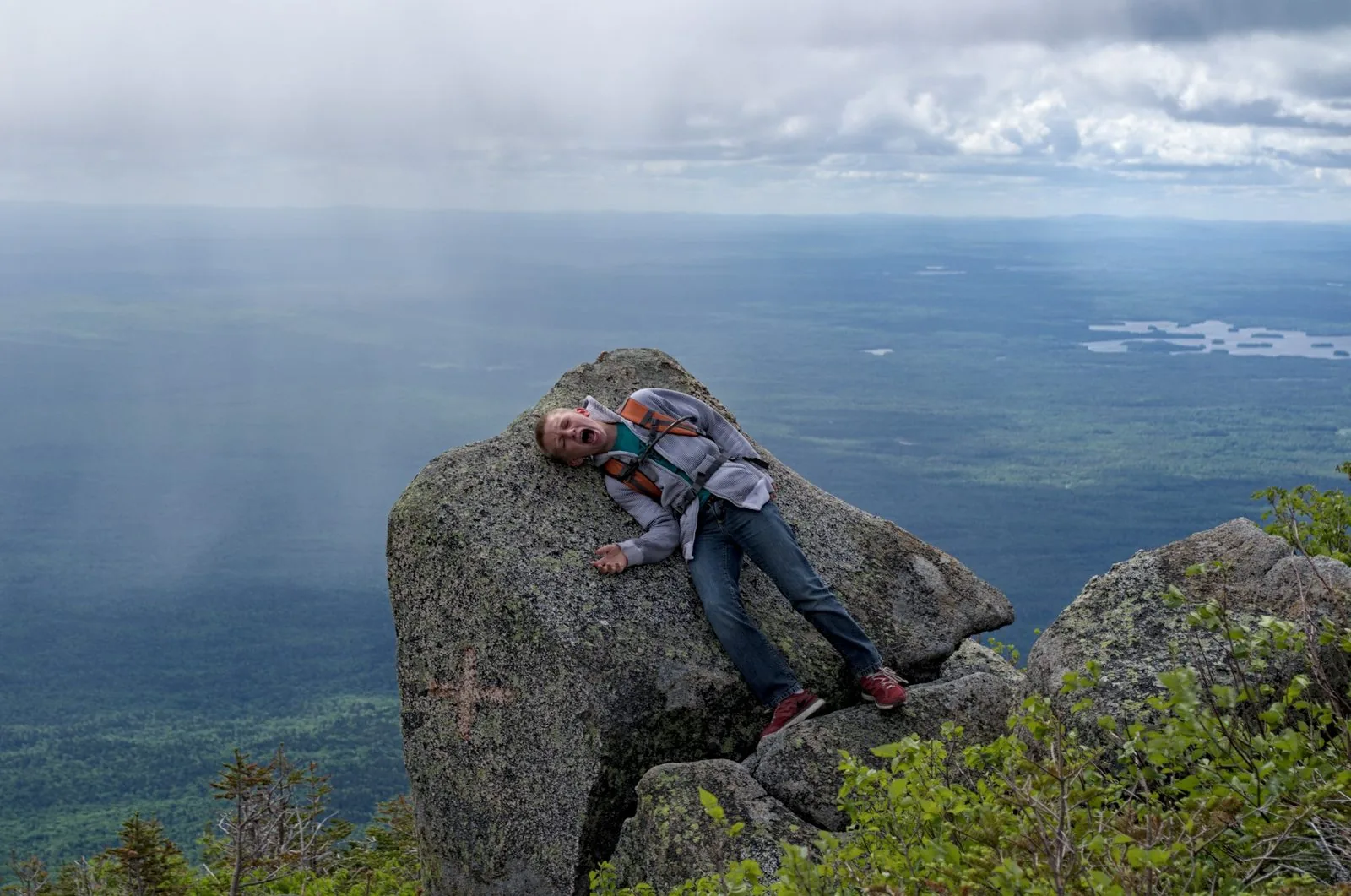
We spent 45 minutes on top. Ate lunch. Watched a through-hiker cry at the sign. The air was cold enough for the extra layer I’d made him carry. On a clear day the view runs 90 miles in every direction; that day we had broken clouds and the Maine wilderness going forever in every direction, which was plenty.
Descent tip: Budget the same time down as up. The upper scramble is harder on knees going down, and tired legs on wet granite is how injuries happen. We took the same route out and were back at the trailhead by 3:30pm — nine and a half hours total.
The Ice Caves: Sandy Stream Pond
Here is the part that became the actual trip highlight. I had told him about the ice caves at Sandy Stream Pond as a carrot for the descent, and they delivered.
The ice caves are a ten-minute walk from Roaring Brook Campground on the Sandy Stream Pond trail — no summit required, no permit needed beyond park entry. The caves form in a talus field where large boulders have settled into a configuration that traps cold air year-round. In June, while it was pushing 75°F at the trailhead, the inside of these caves holds ice.
To find them: take the Sandy Stream Pond Trail from Roaring Brook. Just before the pond, look for the boulder field on the left. The entrance is between two large slabs with a metal railing installed by the park for safety. Bring a flashlight — you will need it.
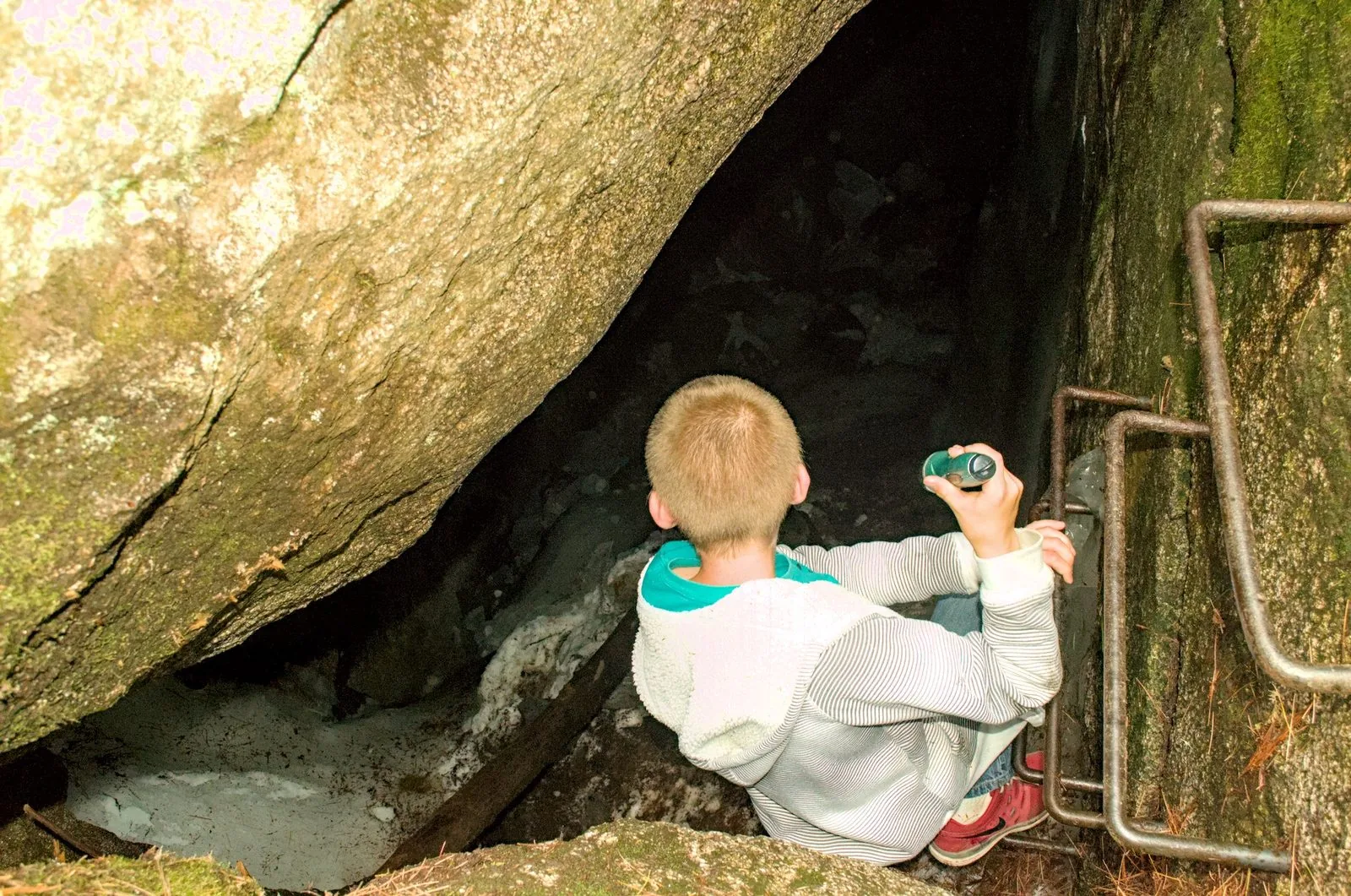
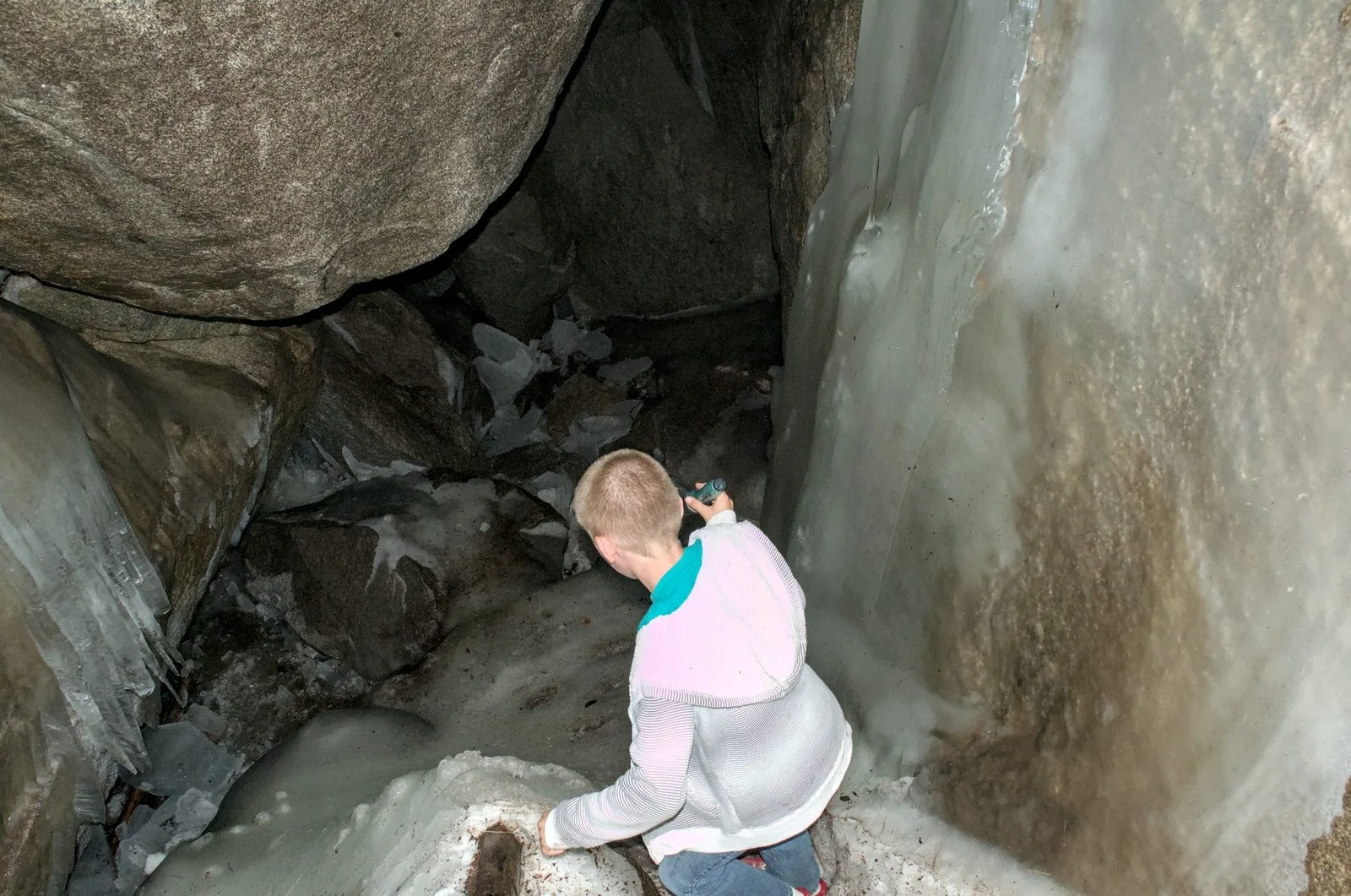
Inside: genuine ice. Formations on the walls, ice sheets on the floor, cold air pouring out of the dark. My son spent twenty minutes in there. He asked three separate times if we could come back.
The moose viewing at Sandy Stream Pond is also worth the stop. We saw a cow browsing in the shallows at dusk — the whole Baxter evening: ice caves, moose, sunset through the spruce.
Would I Do It Again With a Kid?
Yes, without question. Twelve is the right age — old enough to manage the terrain and young enough that the summit carries genuine weight. The mountain will demand something real from them. That is the point.
The short version for families:
- Reserve in February, arrive early, camp the night before
- Six-hour minimum car-to-car; nine is more realistic with stops
- Real hiking footwear, not sneakers, for the upper trail
- Add the ice caves at Sandy Stream Pond — they require nothing extra and are legitimately extraordinary
- Watch the afternoon weather; turn around without negotiation if storms build
He has already asked about the Knife Edge. We are going back.