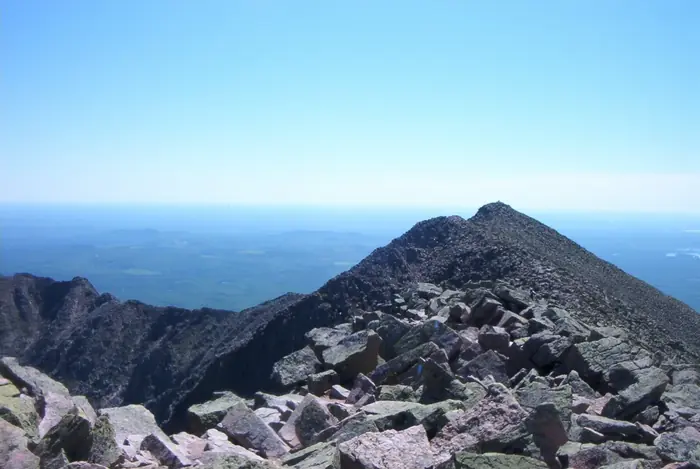
Maine has weather moods. The coast runs 15°F cooler than inland on a sunny summer day. Katahdin’s summit can be 40°F and 40mph when it’s 75°F at Katahdin Stream Campground. The tableland has killed people who dressed for the parking lot. This guide is organized by season because the answer changes significantly.
Spring: Mud Season (March–May)
Maine trail culture has a term for this: mud season. From snowmelt through May, high-traffic trails turn to ankle-deep muck. The Bigelow Range and most western mountain trails are genuinely trashed by spring hikers — consider the coast and Acadia instead, where the terrain drains better.
What you need:
- Waterproof boots with ankle support. Not trail runners. Not sneakers. Boots that seal at the ankle, period. The mud will find every gap.
- Gaiters. Low gaiters keep trail debris out; full gaiters matter on snowmelt stream crossings.
- Packable rain jacket. Spring in Maine means afternoon showers without warning.
- Fleece or insulating mid-layer. Morning temperatures in May are 35–45°F on the summits. The afternoon doesn’t always warm up.
- Bug protection by late May. Blackflies emerge in mid-May. In the woods, especially near water, they are relentless. A head net is not overkill.
Avoid: Cotton anything. Wet cotton has no insulation value and takes hours to dry. Every layer should be wool, synthetic, or down.
Summer: June–August
June is peak blackfly season and the first month of genuine hiking weather on the high peaks. July and August are warm but not hot — Maine summers are nothing like the mid-Atlantic. Afternoon thunderstorms are a real hazard on exposed summits like the Katahdin tableland and the Bigelow Ridge.
What you need:
- Trail runners or light hiking boots. Once the mud dries, the extra weight of heavy boots isn’t worth it on most trails. Exception: anything technical or wet.
- Moisture-wicking base layer. Even a cool day becomes a sweaty day on a hard climb.
- Sun hat and sunscreen. The open granite ridges of Acadia and Katahdin offer zero shade and significant UV exposure.
- Bug spray. DEET or picaridin. In June, bring both and use them generously. By August, the bugs thin considerably.
- Rain layer in your pack. Afternoon thunderstorms develop fast. The Cadillac South Ridge and Gorham Mountain feel very exposed when a storm rolls in.
- Light fleece or puffy. Summit temperatures run 15–25°F cooler than the trailhead. Katahdin’s peak is routinely in the 40s even on July days when it’s 70°F at the campground.
For the Knife Edge specifically: Add wind layers. The Knife Edge creates its own turbulence. A 70°F July day with 20mph gusts feels like 50°F when you’re exposed on a two-foot-wide ridge.
Fall: September–October
The best hiking season in Maine. The bugs are gone, the trails are driest, the air is clear, and from mid-September through mid-October the foliage is extraordinary. This is when Katahdin in October earns its reputation. Crowds drop after Labor Day. Book Baxter reservations accordingly — fall weekends still fill fast.
What you need:
- Layering system. Morning starts in the 30s and 40s; midday on south-facing ridges can reach 65°F. You’ll be adding and shedding layers all day.
- Waterproof boots. Wet leaves are slippery and hide rocks. The trails aren’t muddy but they’re wetter than summer.
- Insulating hat and gloves. Pack them even if you don’t think you’ll need them. Above treeline in October, you will.
- Wind shell or hardshell. October wind on Katahdin’s summit is not hypothetical. The October trip report we posted had 35mph gusts at Baxter Peak. That’s a jacket day.
- Headlamp. Days are shorter. If you’re doing a long objective like Katahdin or Old Speck, leaving by 6am means starting in the dark.
Trail microspikes: Keep them in the car from October onward. Early snow and hard frost can glaze exposed ledge. The Grafton Notch trails and Bigelow Range see first ice in October most years.
Winter: November–March
Maine has a serious winter hiking community and genuinely excellent snowshoe and microspike conditions. The qualification is that winter hiking here is not casual — it requires real gear and real judgment. Katahdin is closed. Most of Baxter is closed. Acadia stays open and is excellent.
The layer system:
- Base: Merino wool or synthetic long underwear, top and bottom.
- Mid: Fleece or down puffy. Budget one layer for active climbing (fleece), one for stops (down).
- Shell: Waterproof-breathable hardshell. Wind is the primary killer — anything below 0°F with wind needs a shell.
- Extremities: Wool socks (two pairs), liner gloves under insulated mittens, balaclava or neck gaiter, insulated hat. Frostbite starts at the fingers and ears.
Traction:
- Microspikes: For packed snow and ice on moderate trails. Acadia in January.
- Crampons: For steeper iced-over terrain. Technical winter routes on peaks like Old Speck.
- Snowshoes: For deep unbroken snow — common on approach trails before the packed section.
The honest warning: Maine winter hiking kills people who underestimate it. The Camden Hills on a February day with cold rain and wind is a survival situation if you’re in cotton. Acadia in January with a headlamp, microspikes, and wool layers is a beautiful morning. Gear is not optional — it’s the whole game.
The One Rule That Never Changes
Dress for the summit, not the trailhead. Whatever it feels like at your car, subtract 20°F and add wind for the exposed sections at the top. Then pack accordingly. You can always stuff layers in your pack. You can’t conjure them from nothing at 5,000 feet.